AI pilot training is now at the center of Alfaero’s growth, and that growth is no longer only Brazilian. In November 2026, Alfaero is used by pilots in more than 40 countries across 6 continents, its monthly recurring revenue grew more than 500% in about six weeks, and close to half of the new subscriptions in a single week came from outside Brazil.
None of this came from a funding round. Alfaero has not taken venture capital, angel money or loans to expand abroad. Every chart, every country and every AI feature described below was paid for by the subscriptions of the pilots who use the app.
This is the story of a plan that was made long before it showed up in the numbers, and of where the money is going next.
A global plan, years in the making
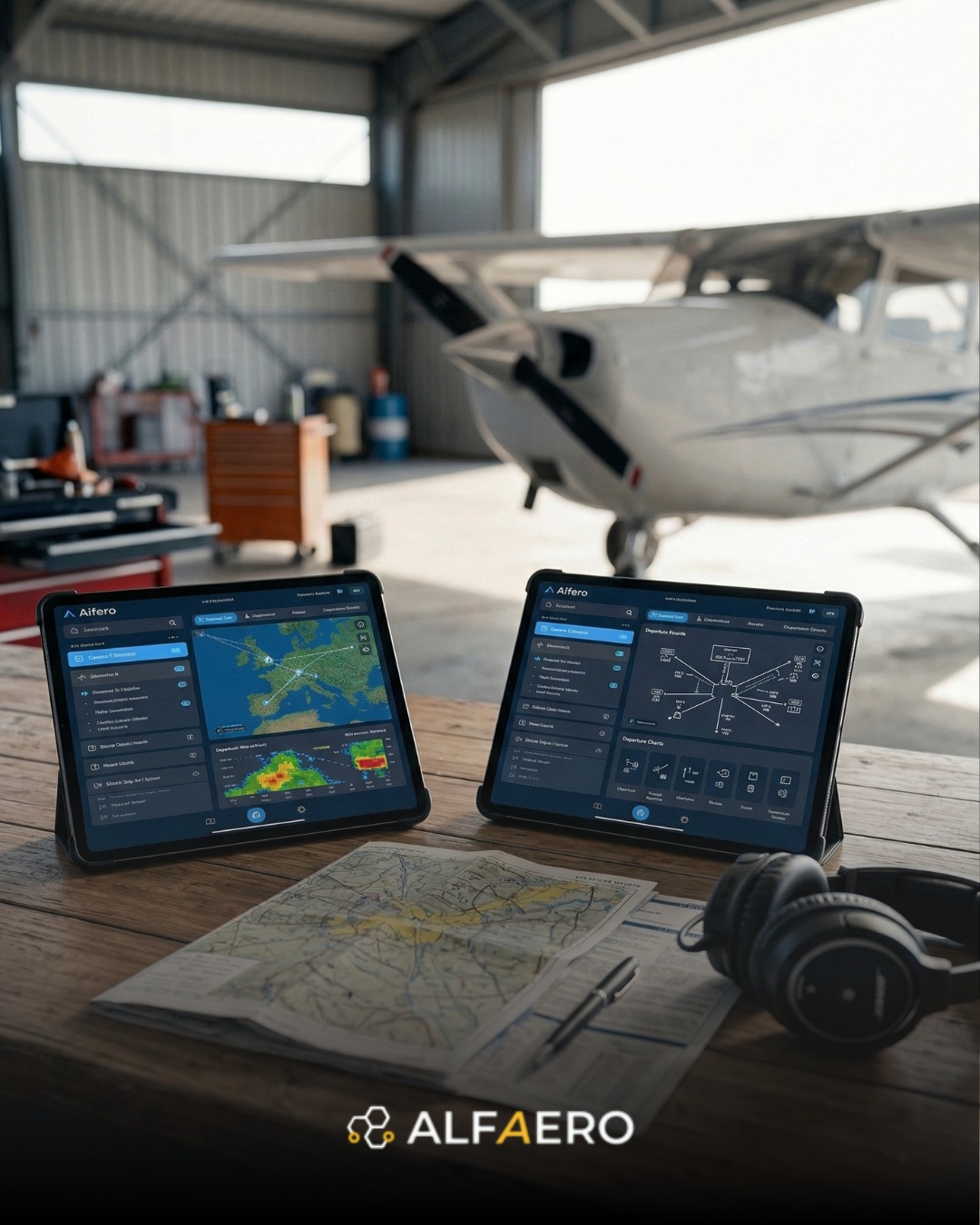
Alfaero started as an electronic flight bag for Brazilian general aviation: charts from DECEA, AIRAC updates, flight planning and a moving map built for the way pilots fly in Brazil. From early on, though, the architecture was designed so that a new country would be a data problem, not a rewrite.
That decision paid off in 2026. Throughout the year, the team added official aeronautical data from four more aviation authorities, one at a time, always from primary sources:
- United States (FAA): charts for more than 3,000 airports and close to 10,000 georeferenced instrument approach procedures, so the aircraft appears on the approach plate itself.
- France (SIA): charts for 132 aerodromes.
- United Kingdom (NATS): airspace, visual reference points and obstacles.
- Germany (DFS): airspace, minimum vectoring altitudes and obstacles.
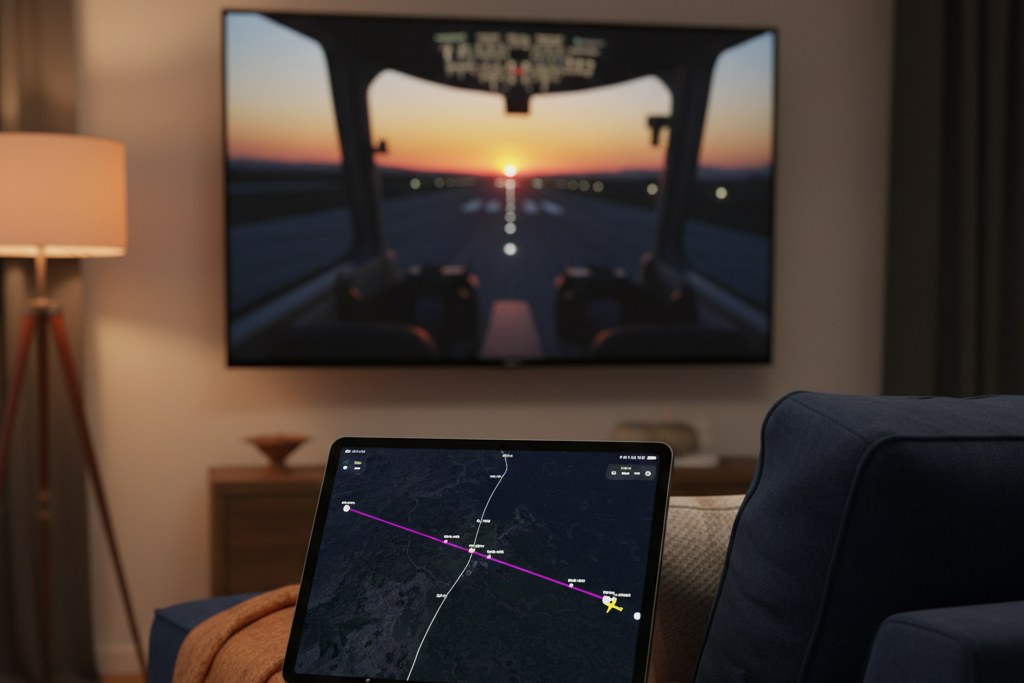
Alongside the data came the platforms. Alfaero now runs on Android, iOS, Windows and the web, and since October 2026 it also works as an EFB for Microsoft Flight Simulator on Xbox, a market that is global by nature. If you fly on console, our guide on how to use Alfaero as an EFB on Xbox covers the setup step by step.
Where Alfaero is today
We are careful with reach numbers. Analytics tools count every app opening, including store review devices, bots and VPNs. So we only count a country when pilots there spent real time in the app (at least five minutes of combined use). By that stricter rule, these are the numbers for November 2026:
| Indicator | November 2026 |
|---|---|
| Countries with real usage | 40+ |
| Continents | 6 (South America, North America, Europe, Africa, Asia, Oceania) |
| Monthly active users (30 days) | About 1,300, up from 536 in the previous 30 days |
| Monthly recurring revenue | More than 500% growth from October 8 to November 23 |
| New subscriptions from outside Brazil | 11 of 23 in the week of November 9 to 15 |
| Official data sources | DECEA, FAA, SIA, NATS, DFS |
After Brazil, the largest communities are in the United States, Germany, the United Kingdom and Portugal. Paying pilots in a single week came from places as different as Belgium, Bolivia and Italy.
Growing abroad without outside investment
Most software companies that go international do it after raising money. Alfaero took the opposite route: it went international in order to grow, using only its own revenue. Looking back, three choices made that possible.
Official data instead of expensive licenses
Commercial navigation databases are one of the biggest costs of any EFB. Alfaero built its coverage on public data published by aviation authorities, such as the FAA digital Terminal Procedures Publication and the DECEA publications in Brazil, processing it in its own pipeline. That keeps the cost per country low and the data traceable to its source.
Lean infrastructure that scales to zero
Services that are not in use cost almost nothing. The AI air traffic control servers, for example, scale down to zero when no pilot is flying, so the bill follows real usage instead of growing ahead of it.
A simulation market with no borders
Flight simulation pilots in Berlin, Austin and Lisbon fly the same aircraft in the same simulator. By serving simulation and real general aviation with the same product, every feature built for one audience reaches every country at once.
Where the money goes
Being bootstrapped does not mean standing still. It means every investment has to earn its place. These are the areas where Alfaero is putting its own revenue in 2026:
- Artificial intelligence: language models, speech recognition and high quality voice synthesis for the AI air traffic controller, the largest variable cost the company has today.
- Aeronautical data: processing, georeferencing and updating charts every AIRAC cycle for five countries.
- Cloud infrastructure: real time flight tracking, the ATC network and offline map delivery for pilots around the world.
- New platforms: Windows, web and Xbox, each with its own engineering and store requirements.
- Community products: Alfaero Eye, the live flight tracker, and Alfaero Life, a career mode that gives every simulated flight a purpose.
AI pilot training: the next chapter
The heaviest investment of all is in AI pilot training. Radio communication is one of the hardest skills for a student pilot, and one of the least practiced, because it depends on a real controller being available. AI removes that limit.
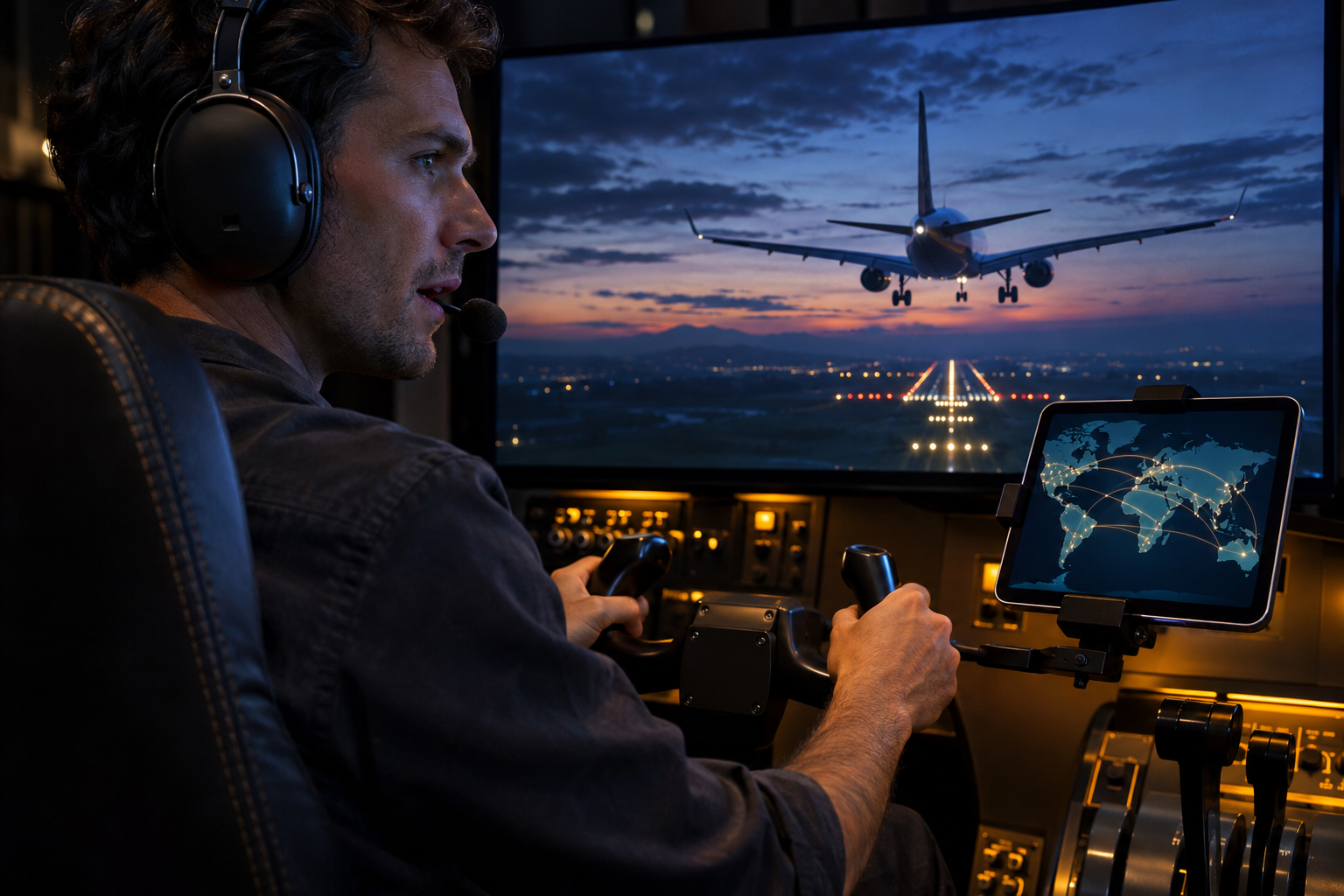
Alfaero’s AI air traffic controller, part of the Alfaero Pro plan (currently in its alpha phase), works on both IFR and VFR flights, on Xbox and on PC. It handles clearance, ground, tower, approach and center positions, follows the procedures published on the real charts, and sequences traffic with other online pilots.
What makes it a training tool
- It corrects you: wrong readbacks are challenged, just as a real controller would do.
- It speaks your airspace’s language: Portuguese in Brazil and English elsewhere, following ICAO standards for aeronautical radiotelephony.
- It is available any time: a student can practice phraseology at 3 a.m. in the busiest terminal area of the country.
- It works with humans: when a human controller from the Alfaero ATC network logs on, the AI hands the position over.
One of the first structured scenarios is phraseology training for private pilot students in the São Paulo terminal area, one of the most demanding airspaces in South America. More scenarios, in more countries, are on the roadmap.
Simulation does not replace flight instruction or count toward a license. What it does is let pilots arrive at the real cockpit having already said the words hundreds of times.
Frequently asked questions
In how many countries is Alfaero available?
Alfaero has pilots with real usage in more than 40 countries across 6 continents as of November 2026. The app itself can be downloaded worldwide, and it carries official chart and airspace data for Brazil, the United States, France, the United Kingdom and Germany, with more countries planned.
Did Alfaero receive outside investment to expand internationally?
No. Alfaero has not raised venture capital, angel investment or loans. Its international expansion, including new countries, new platforms and the AI air traffic controller, has been funded entirely by subscription revenue from the pilots who use the app every day.
What is AI pilot training in Alfaero?
It is radio communication practice with an AI air traffic controller that talks, listens and corrects readbacks in real time. It works in Microsoft Flight Simulator on Xbox and PC, on IFR and VFR flights, and follows the real procedures and frequencies of each airport.
Does AI training count toward a pilot license?
No. Training in a home flight simulator does not count as logged instruction time for any license. It is a complement: it helps students build confidence with phraseology, procedures and situational awareness before and between real lessons with a certified flight instructor.
What comes next
Alfaero went international the slow way: one country, one data source and one platform at a time, paid for by its own pilots. The result is a product used on six continents and a company free to invest where pilots get the most value, starting with AI pilot training.
If you want to see where this is heading, download Alfaero and fly your next route with it. For a broader view of the market, read our comparison of EFB solutions for general aviation.